Lighting and Fitness
Is physical performance weaker or stronger in different lighting? Are humans sharper in spaces lit with warm tones instead of cool tones?
If so, I might have some serious redecorating to do…
Ubiquitous Computing | Cornell University | May 2018
Key Responsibilities:
Literature Review, Experiment Design, User Research, Poster Copywriting
Background
Rome may not have been built in a day, but Rome was probably built in daylight.
Light begets productivity. As humans, our working hours, socializing hours, creating and exerting and Rome-building hours are all during peak access to sunlight or artificial light that allows us to see, feel, and interact with our environments.
It’s natural to wonder, then: in a given realm of human activity, does one tone of lighting catalyze better performance than another?
My classmate Milam Milhouse and I investigated this colorful question while at Cornell University. All too familiar with the challenge of juggling physical fitness and a rigorous course load, we were curious if altering the lighting around us could improve our performance during workouts, for which there were few openings to begin with.
Milam and I partnered on programming health-tracking devices to study the effects of red- and blue-hued lighting on our peers’ physical performance. We conducted a literature review, defined a hypothesis and testing methodology, curated our findings, and arrived at a glimmer of hope for college-goers worldwide.
Hypothesis
Red light will increase physical performance, and blue light will decrease physical performance.
Studies suggest that exposure to bright lights influences levels of alertness and sleepiness [1].
Blue lights has been shown to accelerate post-stress relaxation. Research on the calming properties of blue light [2] signals a relationship between color of lighting and performance.
Research on music and physical performance suggests that music synchronous with movement has a positive effect on the ability to execute physical tasks [3]. Other studies note that intensity of music corresponds to heightened physical performance.
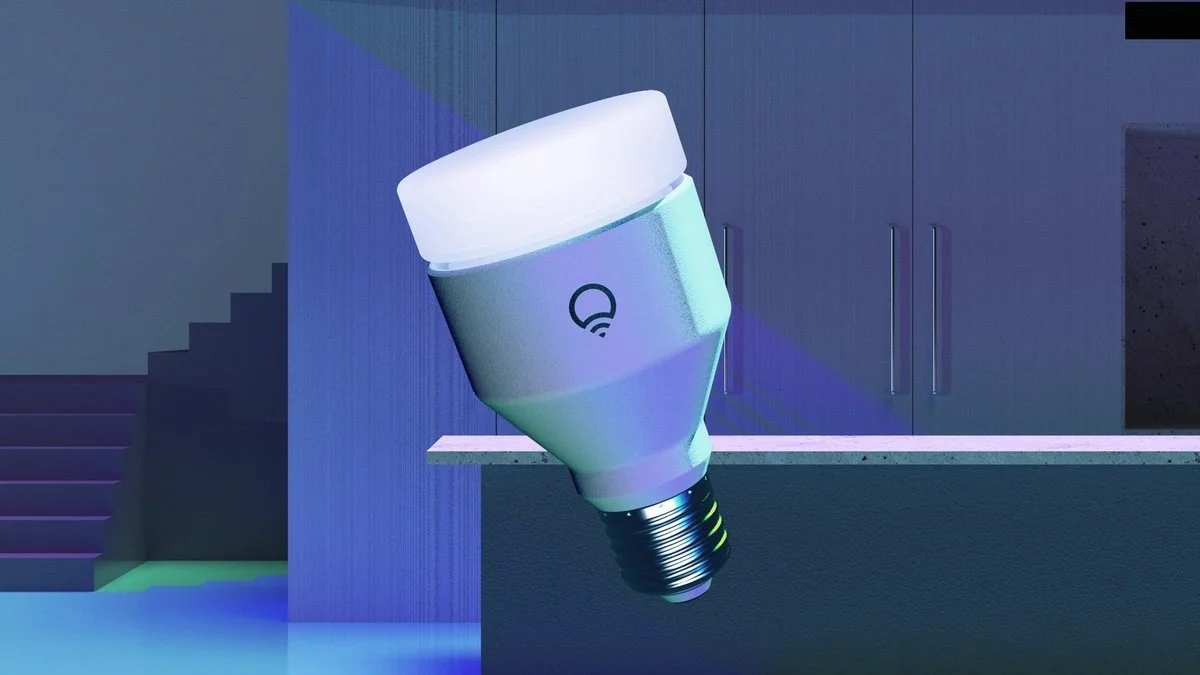
The LIFX light bulb dynamically responds to inputs from paired devices (like Fitbits), adjusting lighting color and intensity.
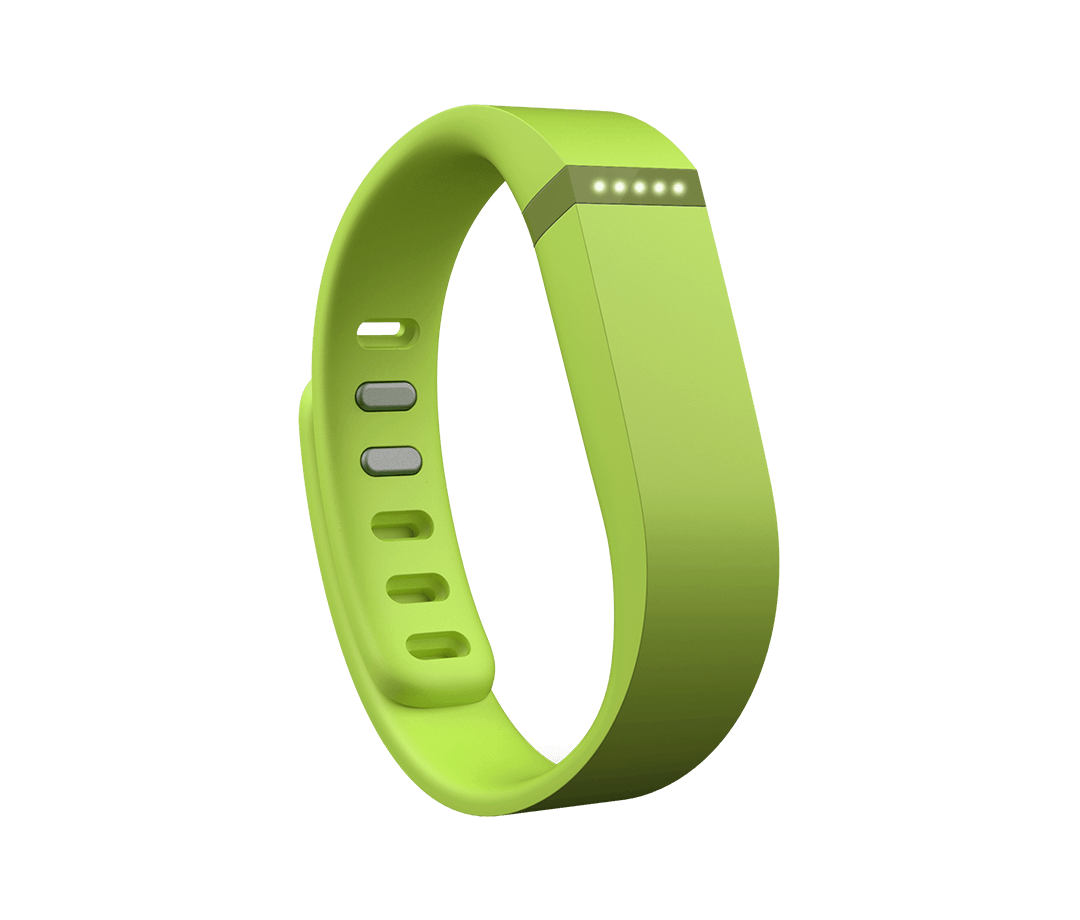
In our study, we measured our participants' step counts through the Fitbit Flex and adjusted lighting accordingly.
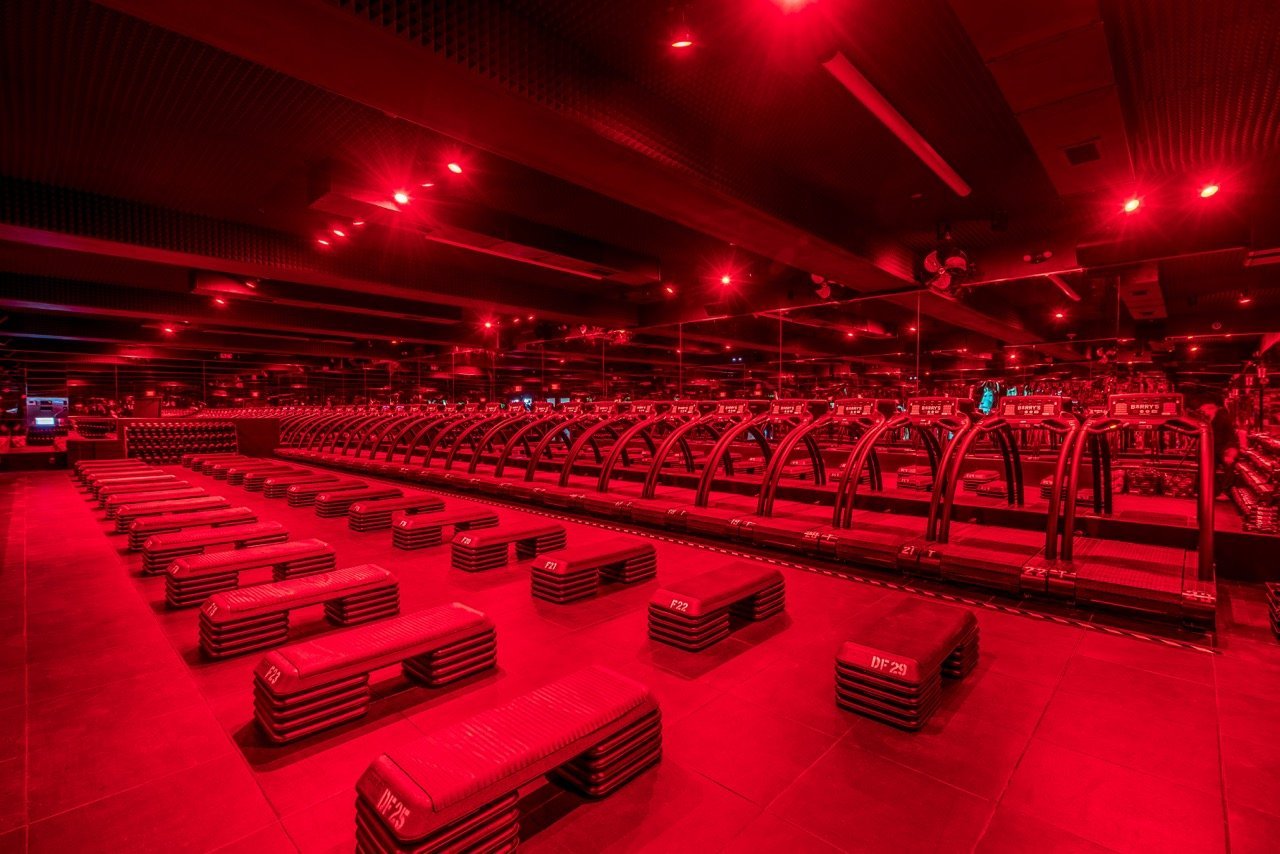
Barry's Bootcamp features fully immersive, lighting-adaptive fitness studios meant to optimize workout performance. Genius!
Experiment Design
The goal of our study was to analyze the relationship between lighting hue and physical performance.
To do this, we programmed LIFX lightbulbs to change colors based on a Fitbit wearer’s activity levels We then recorded the number of jumping jacks that each participant could complete in different lighting hues. We ran this study across 15 participants.
Materials:
1 Fitbit Flex
2 LIFX lightbulbs
Python programming interface
1 room in which to conduct trials
Pre-Work:
Our Python script linked the Fitbit Flex with the LIFX lightbulbs through these steps:
Authenticate with the Fitbit cloud dashboard through a POST request. This should trigger a GET request to extract data from the Fitbit.
Loop through a recurring 1-minute data collection phase that extracts the number of steps that the participant has taken during the observed minute, with distinct starting and post-1-minute step counts.
Categorize the participant’s activity level based on step count per minute:
- Sedentary, if 0-66 steps
- Low Activity, if 67-211 steps
- Moderately Active, if 212-300 steps
- Highly Active, if 301-450 steps
- Dangerously Active, if 450+ stepsTrigger a change in lightbulb color based on participant’s activity level through a PUT request, as follows:
- If Sedentary, then display white
- If between Low and High Activity, then display red
- If Dangerously Active, then display blue
Pilot Study Structure:
We invited each participant to an experimental study room in Gates Hall at Cornell University and requested that they wear our programmed Fitbit Flex for the duration of the study. The room was chosen for its size, as we intended to produce an immersive effect when lighting the room with our LIFX color-changing lightbulbs. Before asking a participant to complete the study, we recorded his/her name, email address, and whether colorblind.
After each session, we noted the number of jumping jacks performed under each lighting condition. We amassed data from 15 participants, 1 of whom was colorblind.
In our pilot, we asked each participant to do as many jumping jacks as possible in a 2-minute timespan, first in red, then blue, then white light, with a 5-minute break between each lighting transition. For both the pilot and final studies, we created and followed a script to allow for a standardized testing environment.
Final Study Structure:
In the next and final iteration of our study, we reduced the jumping jack timeframe to a quarter of the original time, from 2 minutes to 30 seconds.
Secondly, we realized that asking the user to perform jumping jacks under 3 different lighting conditions revealed our purpose: testing for a relationship between lighting hue and workout performance. To make our experimental purpose less obvious, after each 30-second jumping jack session in the final study, we gave participants a 2-minute break during which they were asked to read select chapters from The Girl with the Dragon Tattoo. We then only pretended to note down how much of a chapter each participant was able to get through.
The last major change to our experimental design was randomizing the order of lighting color each participant was exposed to, in hopes of reducing experimental error caused by participant fatigue. For example, one participant completed jumping jacks in the order of red light, blue light, white light, while another followed the order of blue light, white light, red light.
Results and Future Work
37.9
Average Number of
Jumping Jacks in
Blue Light
38.9
Average Number of
Jumping Jacks in
White Light
40.4
Average Number of
Jumping Jacks in
Red Light
The results of our final study supported our original hypothesis. Red light was conducive to higher physical performance, and blue light lowered physical performance.
Given our limited pool of 15 participants, it is difficult to assert from this study alone whether different hues of lighting actively cause or simply correlate to fluctuations in physical performance. At least 30 participants would contribute to a statistically sound analysis.
There is also potential to layer in participant heart rate data (instead of step count data) and modify the experiment’s design (e.g., by sourcing a different set of participants for each type of lighting rather than exposing a single participant to all types of lighting) to gain additional insight into the relationship between lighting and fitness.