Brain Injury Association of Maryland (BIAMD)
Annual Conference: Resilience and Recovery
Traumatic Brain Injury Survivor | Speaker: The Power of Peer Support | April 2025



What happened?
I was a passenger in a motor vehicle accident in December 2022 in Portland, Oregon, USA.
Needless to say, I missed my flight back home to New York City two days after the accident.
I lived! Though, I was unable to celebrate that fact right away. First came several months of hospitalization, numerous legal battles, confrontation of a painful new reality filled with loss, an emotional, social, financial, and physical rebirth, and a (thankfully, temporary) discoloration of my achievements and goals.
The most severe of my resulting injuries was a Traumatic Brain Injury (TBI), which continues to impair my mobility, primarily. I still rely on assistive devices while walking.
Doctors and surgeons delivered me to health by immediately treating a plethora of other injuries (below), minor by comparison.


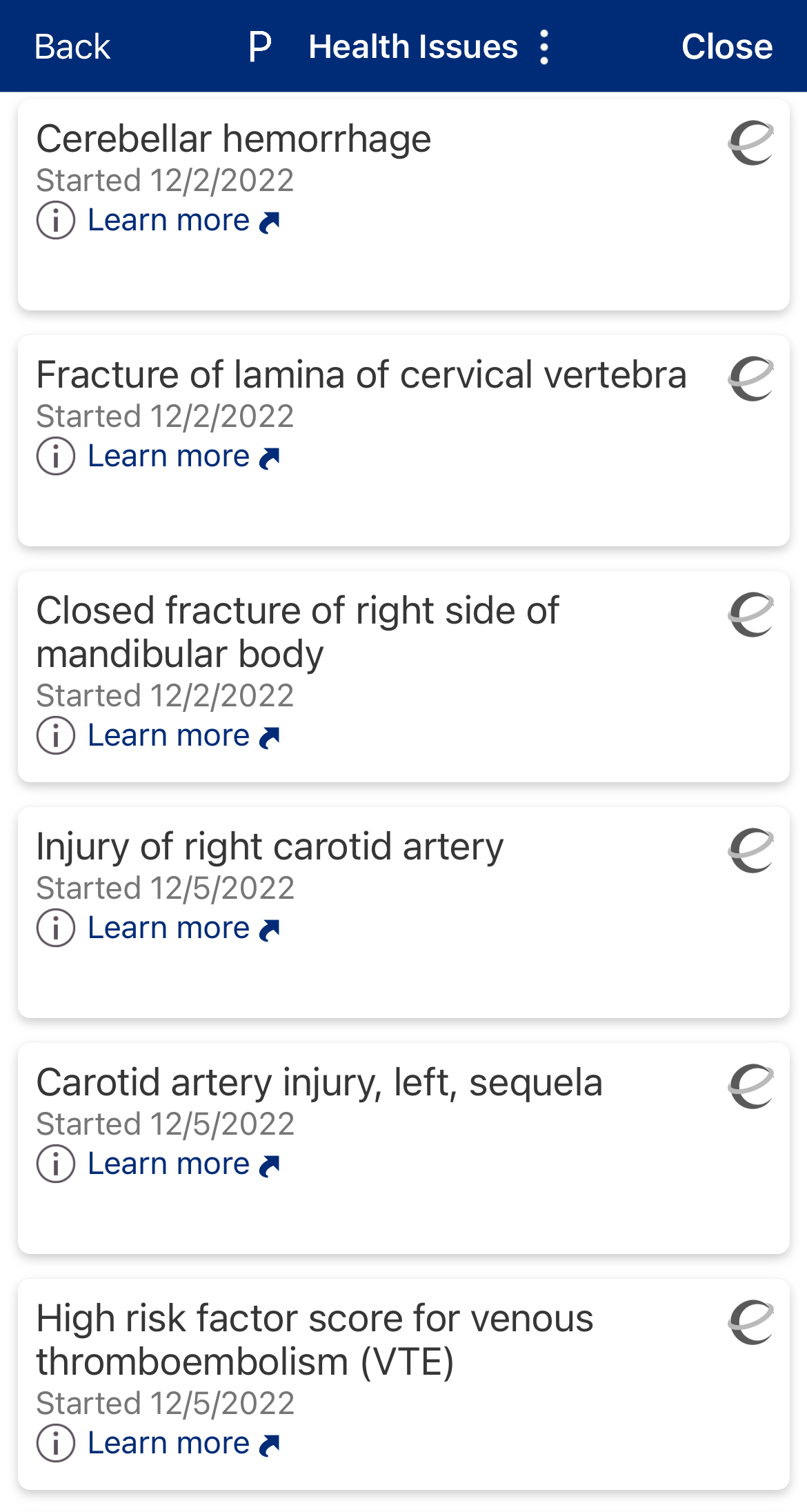
Disclaimer: Clicking “Remove” erases a listed condition from the tracking application; it does not free the patient of the associated symptoms.
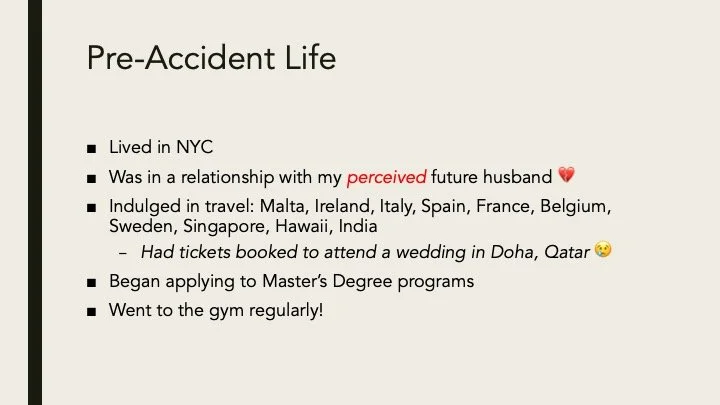
My injury’s less-than-medical consequences demand to be felt to this day.
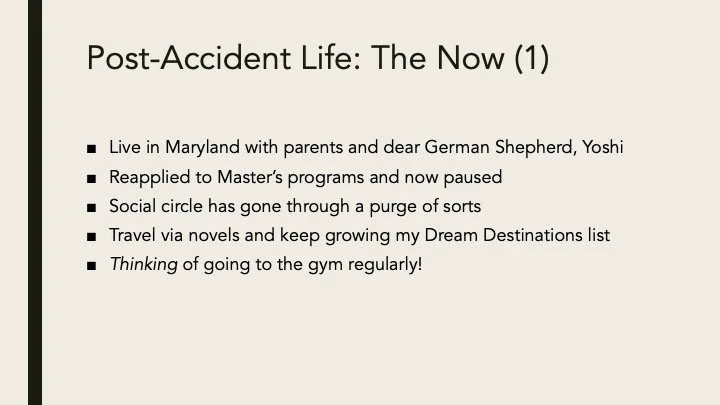
I now reside in my family home in Maryland while engaging in countless streams of rehabilitation.
I lost many friendships, split from my then-partner, and, heartbreakingly, learned that my recovery is optional for quite a few once-key characters.
My sphere of pastimes is limited to stationary activities. No mini-golfing; no bowling.
An unsupportive work-environment led to my resignation as a Product Manager, a title that I aim to reclaim.
What now?
Now, we adapt.
We practice patience, a gene that our mothers insist that we did not inherit.
We share our discoveries with attendees of BIAMD’s annual conference.
At one point, my condition required continuous medical intervention, but I now qualify for outpatient care. Today, medical intervention is sporadic, while my at-home investment in recovery is constant. These principles guide my modified pursuit of high-performance and contentment:
Repeat to learn.
Repetition is avoided in professional settings, but it is encouraged when attempting to move conscious processes into the subconscious mind. Staying upright newly required repetition.
So, every morning and evening, I repeat a set of exercises prescribed by my Physical Therapist, no matter how difficult they are at times.
Stay active.
Running marathons is presently disqualified, but I create impact through other avenues.
I keep my neurons firing away —and have verified that my capabilities are not reduced but altered— by engaging myself as CCMD’s Big Red Bookcase Coordinator and Zia’s English tutor, both roles taken on after my injury.
Be goal-oriented.
Diamonds now take a backseat to purpose on my list of best friends.
Whether it’s a goal to buy nail polish remover today, to finalize my Personal Statement this week, or build stamina for BIAMD’s 1-Mile Walk, goals concentrate my efforts and prevent hurtful speculation.
Lofty goals like traveling to Japan are acceptable!
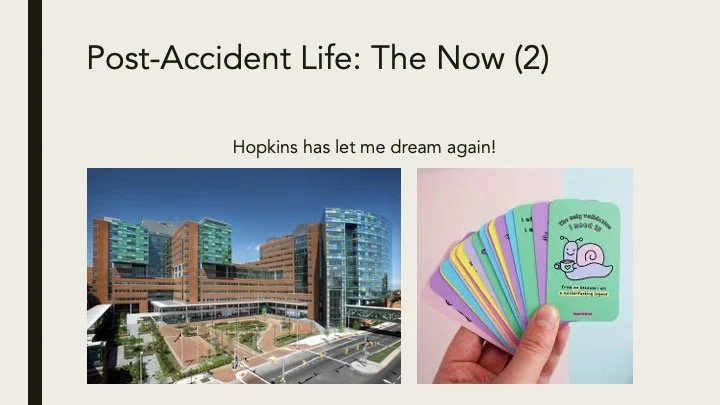
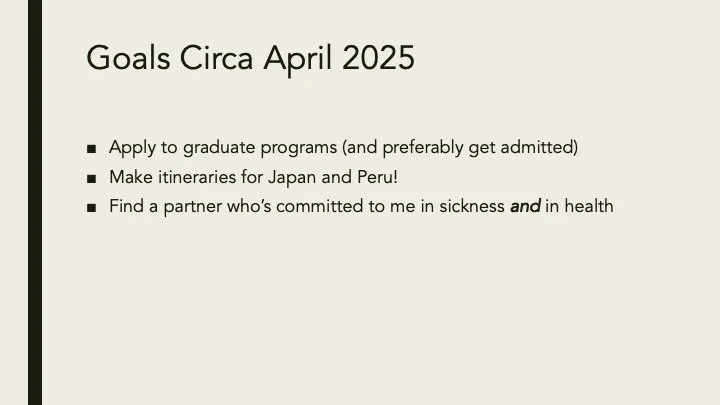
You didn’t hear it from me!
You heard it from Suleika Jaoud, fellow survivor and author of Between Two Kingdoms.
Universal themes in recovery from illness or injury while young:
Isolation / Loneliness / Exodus of Peers
Distinct Pre- vs. Post-Illness Lives
Frustration with Articulating Limitations
Muddled Root vs. Surface Targets of Anger
Coexistence of Guilt and Irritation
Awareness of Fortune Alongside Inequity
Anticipation Mingled with Fear of the Future
Pursuit of Creative Projects
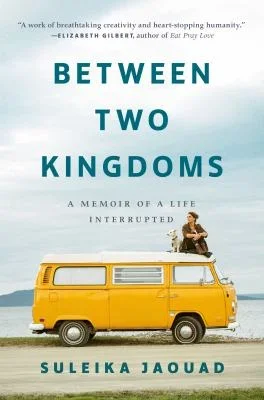
More on Mental Battles
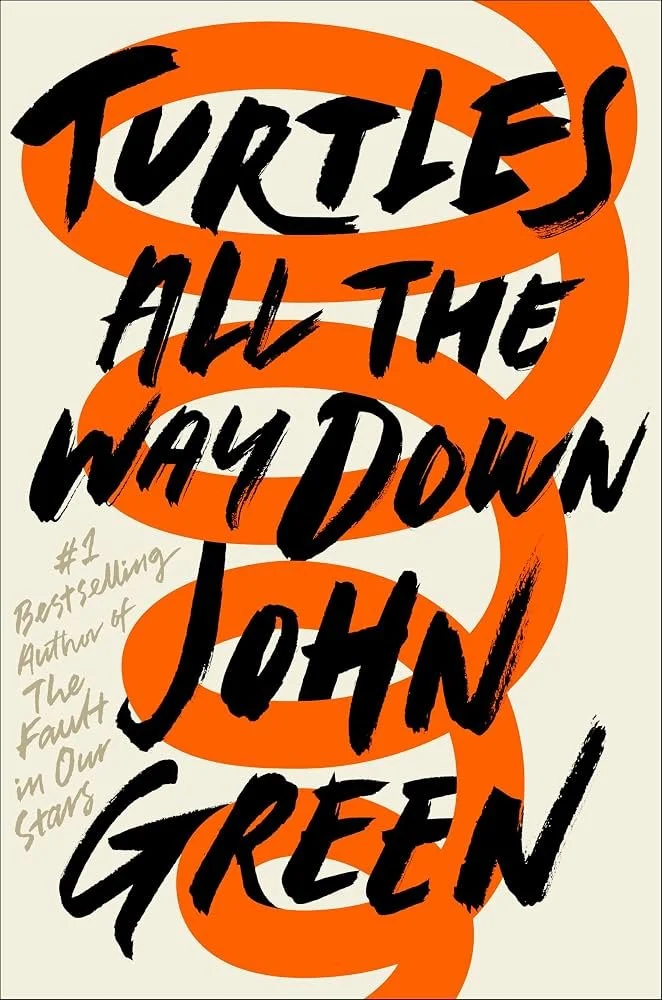
286 gripping pages more, precisely.
John Green explores the isolation, dysfunction, and smallness that follow the protagonist of Turtles All the Way Down, Aza Holmes, as she wrestles with Obsessive-Compulsive Disorder.
Spoiler alert! Ultimately, Aza rises above her OCD to solve the disappearance of a billionaire.
“What’s past is prologue.
—William Shakespeare, The Tempest”
—Russell Davis Pickett, Jr., Personal Blog